Bargain Table Horse Books and Arabians

IMG_4353

It seems that every horse coffee table book I’ve ever picked up from a book store bargain table always includes Arabian horses.  I started thinking about this because I was disappointed that the book pictured above doesn’t contain one of my favorite breeds, Marwari.  But then I thought, well, I guess it would be pretty impossible to include every breed of horse in every coffee table book.  But then I thought further and realized they always include Arabians.  (At least the ones I’ve seen.)

This book even has one section completely devoted to them:

IMG_4354

While the rest of the breeds are grouped into categories:

IMG_4355

A quote from the book: “With his tiny curved ears, large liquid eyes, extravagantly dished face and luxurious mane and tail, the Arabian is the horse of dreams.”

Another quote: “This beautiful ancient breed is thought to go as far back as 3000BC and has strongly influenced many of today’s more modern breeds of horse.”

I’ve been aware for some time that the Arabian horse influenced many other breeds, most notably the thoroughbred through the three foundation stallions;

The Byerley Turk:

270px-Byerly_Turk
The Byerley Turk by John Wootton

The Darley Arabian:

Darley_Arabian
The Darley Arabian stallion painting by John Wootton

And the Godolphin Arabian (my personal favorite):

Godolphin_Arabian
The Godolphin Arabian, by George Stubbs

(I’ll write more about these three Arabians in another post.)  I was surprised to learn that Arabians also directly influenced the American Quarter Horse.  Growing up in Texas, it always seemed that Quarter Horse owners and Arabian owners are of different mindsets.  It still seems that way actually. So other than a little Arabian blood coming through to the American Quarter Horse via early Thoroughbred foundation stallions, I had no idea that there were full blooded Arabians among the early Quarter Horses until I read an article in the December 2018 issue of Equus that mentioned two Crabbet-bred Arabians who were direct sire-line descendants of Mesaoud, one of the foundation sires of the Crabbet Arabian Stud in England.

Mesaoud
Mesaoud at Crabbet Park

The stallions were Astraled and Ribal:

Astraled

ribal2

I never tire of learning about Arabian horses and their influence on other breeds and their appearance throughout human history.  I have much more to learn about the Arabian horse, but as in everything I love, I am a life-long learner.  I welcome comments and additional information as I know this blogpost just barely scratches the surface. I’m learning as I write!

Stallion Spotlight-Affirmativ

Affirmativ (Andreanov x Cedaridge Folaura) 1984-2009

Affirmativ is the sire of AV Olympic Spirit, resident black stallion at The Franch and he is grandsire to my two loves, Flame and Fyrestorm. He was owned by Jim and Renee Boeshans of Springfield, Oregon and Renee calls him their “miracle horse”.

Renee had taken her friend to Twin Fir Farms in Sisters, Oregon to look for a colt, when a sweet, little, black, one-month old colt decided to start following Renee around. She says, that while they were choosing a different colt for her friend, Affirmativ chose her.

He is their miracle horse because at the age of 18 months he broke his leg and they were devastated. Affirmativ was sent to Oregon State Veterinary Hospital for surgery and had a pin put in the leg, but was rejecting the pin and was sent home for the Boeshans to treat it. Miracle of miracles happened and it healed. They had not been expecting to be able to show or ride him, but the plucky young stallion made a full recovery. Affirmativ would go on to become a winner in country English pleasure and halter. He was Scottsdale’s Most Classic Arabian and Champion Native Costume horse in 1994. And later at the age of nineteen, he was shown in hunt seat, western and native costume by their granddaughter, Cortney Boeshans.

Affirmativ has over 100 foals in the U.S., Canada and Germany. The ones that have been shown have done very well, winning national, regional and Class A championships. One of which being, AV Olympic Spirit aka Spirit, who was 2004 Top 10 US National Champion Arabian Working Cow Jr Horse.
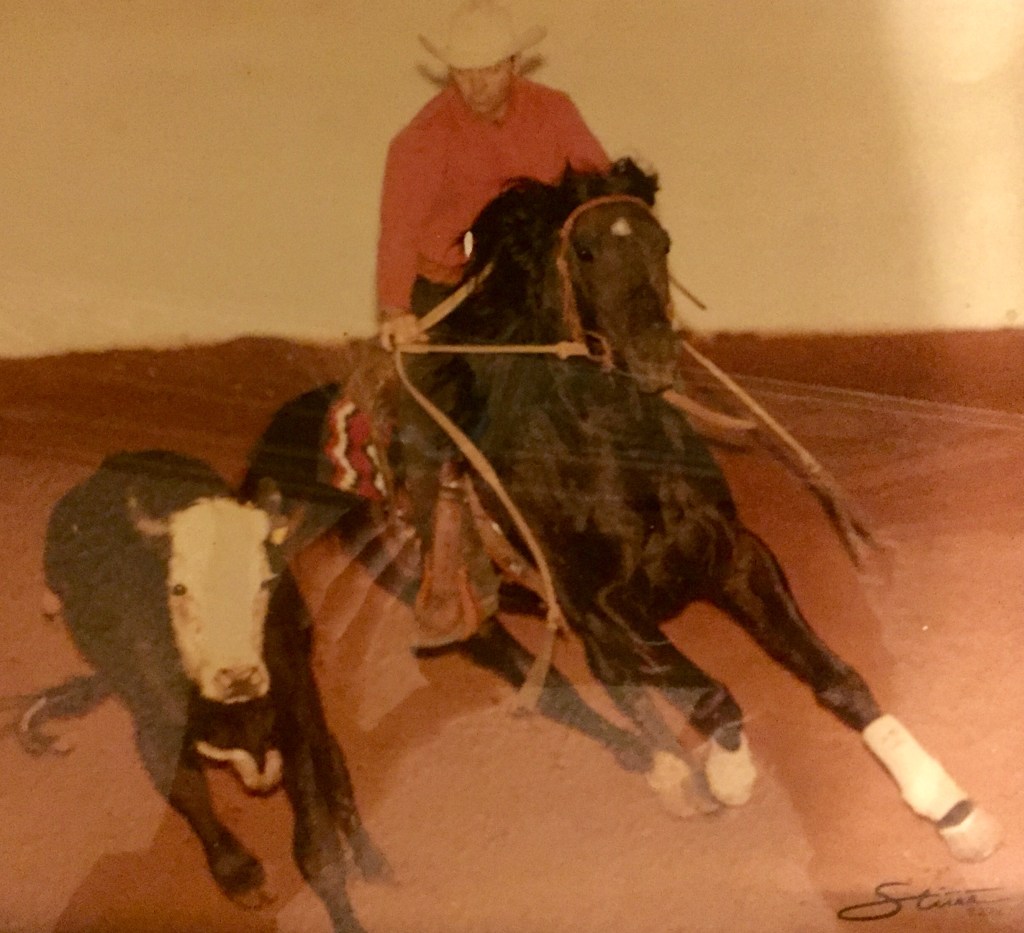
AV Olympic Spirit (Affirmativ x Raylee Asasi)

Affirmativ has the true, classic Arabian look with chiseled head, large eyes and long “hooky” neck that breeders strive for and it is passed on through his bloodlines as can be seen in his grandson, NH Fyrecracker aka Flame:
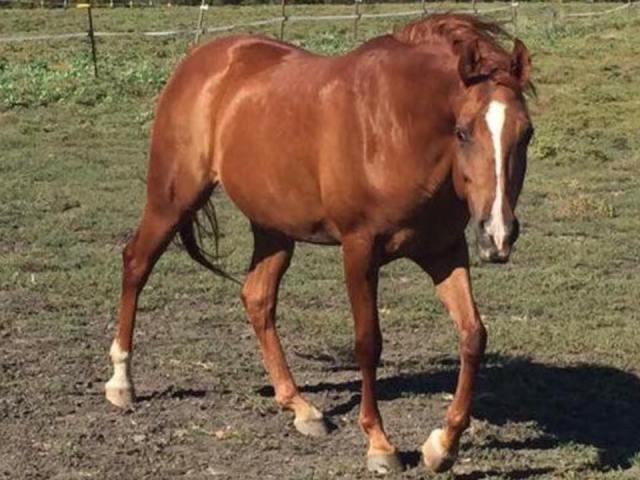
NH Fyrecracker (AV Olympic Spirit x Fyrelite Bynite)

The Arabian horse world is both large and small at the same time. Renee and I became friends on Facebook through the connection between our beloved horses and we both have a mutual love of the breed. I couldn’t be happier that Affirmativ chose Renee and became her “miracle horse”.

Affirmativ

NH Fyrecracker-Franch Bred Arabian

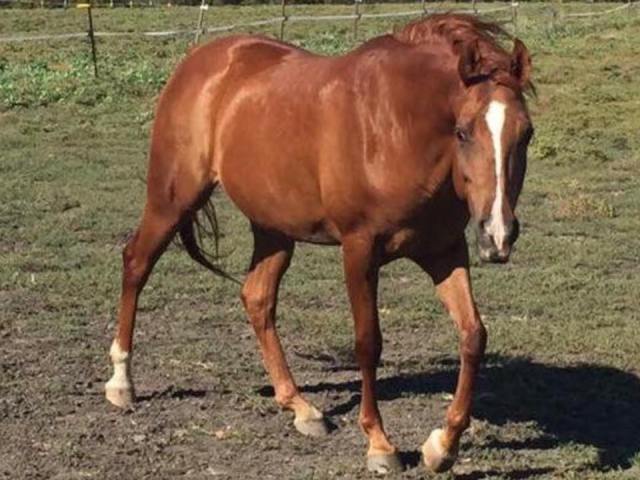
NH Fyrecracker aka Flame

It was love at first sight for me and this sweet boy! He was introduced to me as Fyrecracker, but I couldn’t resist calling him Flame because of his fiery, red color which brought to mind Walter Farley’s Island Stallion of the same name. The name also seemed fitting because his sire is the black stallion, known as Spirit around The Franch.

AV Olympic Spirit

Spirit’s sire is the beautiful, Affirmativ:

Affirmativ

Flame is a Polish Arabian and he has the great, Bask in his pedigree three times on both his dam and sire’s side.  He also has several Varian Arabians in his bloodline. He has Bay El Bey on his sire, Spirit’s side who was well known in Arabian horse circles as “The Kingmaker”.  Bay El Bey’s descendants are stamped with his distinctive look, intelligence and excellent disposition, which is definitely true with Flame because he possesses the long arched neck, kindness and intelligence that has been passed down to him through the generations. To learn more about Bay El Bey, check out The History of Bay El Bey.

On his dam, Fyrelite Bynite’s side, Flame has in his bloodlines the following Varian Arabians, Khemosabi (Khemo as he was known, was actually raised by Ruth and Bert Husband, but his breeding career was launched by Sheila Varian.) and the mare, Bayanka.

Flame is the stuff of a little girl’s dreams!

“I love you!”-Flame

Al Khamsa (The Five)

AlKhamsabiggerversion

Al Khamsa by Karen Kasper

All modern Arabian horses are said to descend from five original mares.  There are many versions of the story of Al Khamsa, but the one that seems to be the most popular is the one in which it is said that after a long journey, Mohammed released his band of horses to drink water at an oasis, but then blew his battle horn and only five of the mares stopped and returned to their master in spite of their great thirst.  The legend goes that these five mares were chosen to be the foundation mares for the Arabian breed because of their loyalty to their master.

The five strains named after these mares are, Keheilan, Seglawi, Abeyan, Hamdani, and Hadban, or various spellings there of.

In her book, The Classic Arabian Horse, Judith Forbis tells an albeit less magical story about the origin of the five mares in which several tribes from Yemen come to visit the prophet Mohammed and present him with “five magnificent mares, belonging to five different races of which Arabia was then said to boast.” In her version, Mohammed steps out of his tent, caresses them and says, “Blessed be ye, O Daughters of the Wind.”

Also in Forbis’s book she states that Carl Raswan, who was a well known historian of early Egyptian Arabians and lived among Arab tribes for over a decade, did not acknowledge all five strains.  “Raswan divided the Arabian breed into three main strains,…Saklawi was representative of feminine elegance, grace, and refinement, while Kuhaylan, signified masculinity, strength, boldness and power.  The Muniqi strain was of a racier build, usually more developed in the forehand and lighter behind.”

The Al Khamsa may be stuff of legend, but according to alkhamsa.org, “Any horse in North America that Al Khamsa, Inc. believes, after study, to descend entirely from Arabian horses bred by the nomadic Bedouin horse breeding-tribes of the Arabian Peninsula is an Al Khamsa Arabian.”

2018 U.S. Arabian Nationals

Our staff photographers, Steph Young and Debi Wimberly Hensley went on assignment last weekend and captured these sights and sounds from the 2018 Arabian Nationals in Tulsa, OK. Enjoy!

Arabian Hunter Class:

Arabian Hunter Class

Grand Champion Arabian Hunter Pleasure 4-year-old:

Two top stallions:

Stallion Close Up:


Thunder-Denver Broncos Mascot:

Thunder Close Up:

IMG_1790

Stallion Spotlight-Bay-Abi

Bay-Abi

Bay-Abi is the Arabian stallion who is the founder of the Varian Arabian dynasty.  Flame and Honey have him twice in their bloodline through both their dam, Fyrelite and sire, Spirit.

Sheila Varian was 19 years old, when Bay-Abi crossed her path in 1959.  She had little money, but big dreams.  With her mother, Wenonah’s help, Sheila bought Bay-Abi as a 2-year-old at auction at the first Arabian horse sale to be held at San Francisco’s Cow Palace. Sheila was to have a life long love affair with the beautiful bay stallion.

Sheila Varian and Bay-Abi:

SheilaVarianandBay-Abi

Bay-Abi crossed well with a variety of blood lines, but Sheila Varian noticed that several respected breeders were having good success crossing American-bred Arabians to Polish imports so she purchased three mares sight unseen directly from Poland in 1961 with the assistance of Englishwoman, Patricia Lindsay. This was all done through old-fashioned correspondence, so it was a risky proposition, to be sure.  It was worth the risk though, because Bay-Abi made breeding history with the three mares, Bachantka, Ostroga, and Naganka.

For more information on Bay-Abi, visit the Varian Arabians website.