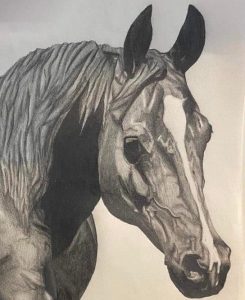
Marwari-The Desert Horse of India

The Marwari is a rare and ancient breed of horse that originated in the Marwar region of western India. The breed is easily recognizable due to its inwardly curved ears. The Marwari is believed to be descended from the warhorses of the Rajput warriors of the Marwar region.

The origins of the Marwari horse are uncertain, but the breed is likely to have been influenced by Turkoman type horses brought to the area by Mughul invaders, as well as the Arabian horse. There is an Indian legend that seven Arabian horses of good breeding were shipwrecked off the shore of the Kachchh District and were taken to the Marwar region to be used as foundation bloodstock for the Marwari. Like the Arabian, the Marwari is know for its hardiness and also like the Arabian they were bred as warhorses. They were renowned for their courage in battle and loyalty to their riders. It was said that a Marwari horse would only leave a battle under three conditions; victory, death, or carrying its master to safety.

Maharana Pratap on Chetak, Moti MagriUdaipur, by Ankur P

Chetak was a legendary Marwari horse. The grey stallion purportedly carried Maharana Pratap to safety after he slayed the last of the Moghuls in the battle of Haldighati. The courageous stallion was said to have been brave enough to take on an elephant and reared so that Pretap was able to kill the Moghul who sat atop the war elephant. Chetak was mortally wounded by the elephant’s tusks, but he carried his master to safety, traveling many miles before dying near a river.

The Marwari were almost eliminated during the British rule of India during the early 1900s. The British preferred their thoroughbreds and polo ponies and ridiculed the horses with the inward turning ears. Even after independence from Britain, the Marwari horse was still endangered because war horses were no longer needed and many of the Indian nobleman who bred them had lost their land.

The Marwari horse was on the verge of extinction until Maharaja Umaid Singhji stepped in to save them and his work was continued by his grandson, Maharaja Gaj Singh II.

Later in 1995 a British horsewoman named Francesca Kelly founded the group, Marwari Bloodlines. Then, along with her husband, Raghuvendra Singh Dundlod, they led a group in 1999 that founded the Indigenous Horse Society of India which helps promote and preserve the breed.

Ashwarya aka Rae Rae

Ashwarya who is named after a Bollywood actress is currently residing at The Kentucky Horse Park and she was donated to the park by Francesca Kelly. She’s the only Marwari horse in the U.S. presently as far as I can tell due to the fact that India does not allow the export of the breed at this time. According to my research, Francesca Kelly has since moved the rest of her Marwari brood to the UK. If anyone is aware of others in the U.S. I’d love to hear from you.
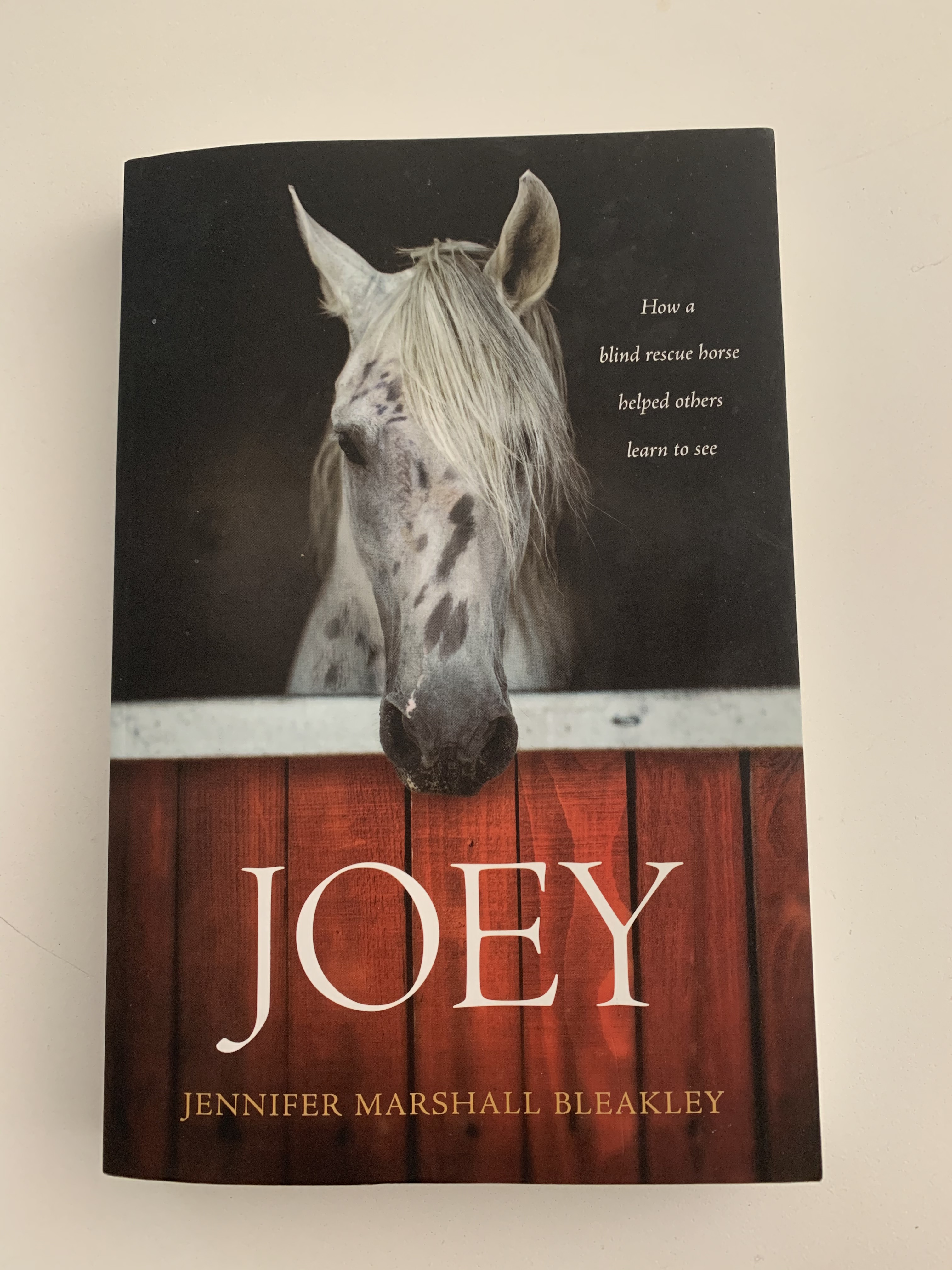
Book Review-Joey by Jennifer Bleakley

Joey Book Cover

Joey is the biography of a horse, but not a famous horse like Man O’ War or Seabiscuit, just a regular horse that was saved from bad circumstances and in return rescued his rescuers.  Everyone who ever meets Joey can’t help but fall in love.  Joey had been a show horse early on, but after an injury ended his show career he was passed from owner to owner and eventually ended up in a neglectful situation, which often happens to horses who are considered no longer “useful”.  At some point during this time he went completely blind, which was probably due to malnutrition.

Along comes Kim Tschirret who has a dream to unite troubled horses with troubled kids and Hope Reins is born. Joey along with another Appaloosa, named Speckles, arrive together at the fledgling therapy horse ranch to be among the first group of horses to help troubled kids.  The volunteers at the ranch, along with Kim, learn as they go and have to face special challenges brought on by a blind horse like Joey.  The book is inspiring because they learn and adapt to Joey’s needs as well as the needs of the children entrusted to their care.

There is a strong Christian theme to this book, which I thought might be off-putting for me because I am not particularly religious; although I do believe in a higher power.  But, it’s actually heartwarming following the main players and how each of them addresses their individual faiths and hope in God and the miracle that is Hope Reins.

Warning; tears will be shed in the reading of this book.  Sometimes the tears will be because of sadness, but mostly because the book is heartwarming.  Reading this book strengthened my belief in the something more that all of us can have faith in and the ability of some people to truly access the goodness with themselves.  I highly recommend this book for horse lovers and anyone who wants further evidence that there is true kindness to be found amongst the humans.

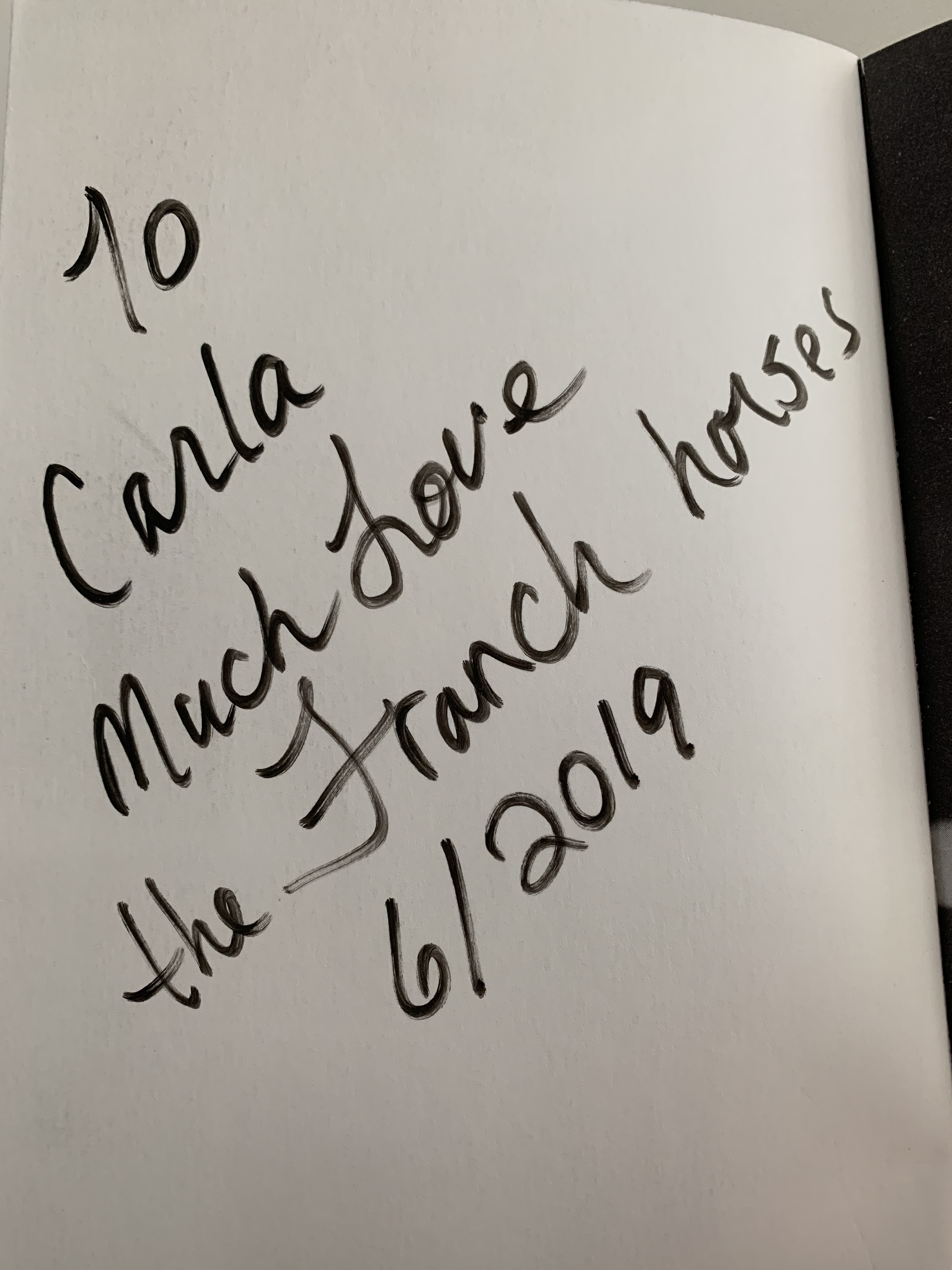
This book was a gift from my beloved Franch horses:

Joey Inside Book Cover

Pretty sure my dear friend, Julz, helped them pick it out! 😉

Timmy the Rescue Pony-Star of “Timmy Tales”

CuteTimmyatcar

Timmy is one of my two rescue horses who now calls The Franch home.  He is a sweet loveable pocket pony who loves everyone.  He has never been ridden and I estimate his age to be around nine at the time of this writing.  He was rescued from a severe neglect situation along with 63 other horses in Lewisville, Texas in 2009 by Anastasia Keyser of Hope for Horses Equine Rescue Inc.

Here is a before photo of a small group of the rescues back in October 2009:

LewisvilleHorses10-09003

Timmy was less than a year old at the time, so he may have been too young to remember much of what happened, considering how much he trusts people.  Most of the rescues were Pony of the Americas, Haflingers and a few other breeds.  He has the coloring of a Haflinger, so I just like to say he’s half-Haflinger and half Pony of the Americas, but he’s just really my sweet, cute, funny little boy!

Timmy in the pasture:

Timmyinthepasture

Timmy and his best friend, Frisco (my other rescue horse):

FriscoandTimmy

Timmy and me:

Timmyandme